The New Building Blocks of American Trade Policy
Big structural changes in U.S. trade policy often require years of negotiations and congressional approval. The original North American Free Trade Agreement (NAFTA) took 14 months to negotiate and another roughly 16 months to be ratified and enacted. Completion of the follow-on agreement, the United States-Mexico-Canada Agreement (USMCA), was roughly three years in the making.
But history is helpful as a guide until it isn’t. The last five months have covered as much structural change as some of the country’s most notable trade pacts. The consequences have been equally significant.
The legal authorities the Trump administration has leaned on over that period to carry out its trade agenda aren’t new. Section 122, Section 232, and Section 301 of the Trade Act of 1974 have existed for decades. What’s new is how aggressively—and how independently of Congress—the executive branch has used them to build a new trade architecture.
To be sure, these authorities are not designed to create a seamless tariff wall. Openings have been preserved for goods that cannot be grown or produced in the U.S. and for sensitive technology, such as semiconductor manufacturing equipment.
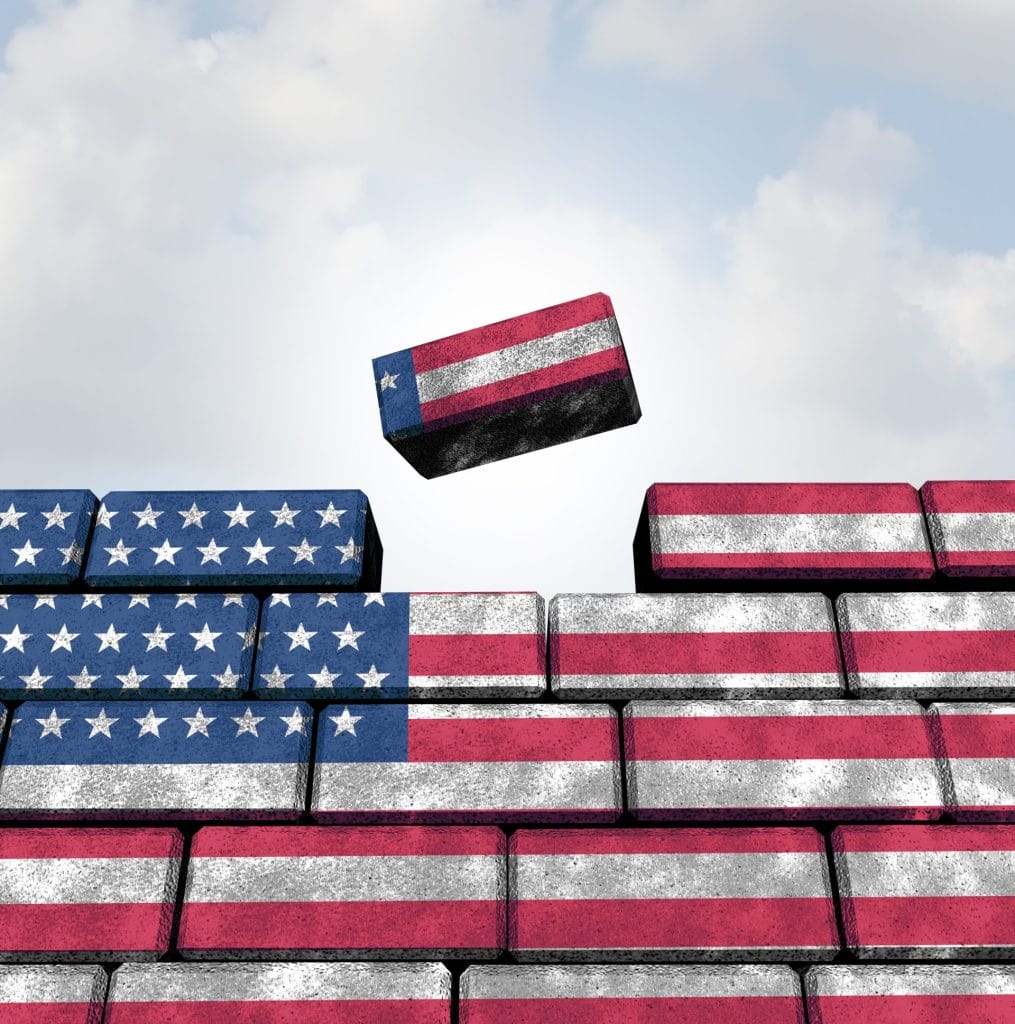
But enough of the structure is now in place to appear concrete, even as it continues to take shape. As this White House saw in February, courts will play a role in shaping the ultimate tariff architecture. But the administration has demonstrated that its willingness to impose tariffs can be nearly as important as the specific legal authority it invokes.
Could a new administration reverse course? Yes, but it would face significant political hurdles in reversing these policies. Although tariff increases can raise consumer costs, they’re generally difficult to repeal politically. The Section 232 tariffs on steel and aluminum imposed during President Trump’s first term largely survived intact throughout the Biden administration.
Predicting precisely how long these new building blocks endure is difficult. Under the legal authority the administration has relied on for its latest tariffs, highly technical legal timelines—such as the requirement to start a review of the tariffs’ effectiveness after four years, when the same the law does not explicitly mandate when that review has to finish— heavily dictate when and how tariff levels can actually change.
History sped up
The building blocks of this new trading regime began to take shape long before February 20, when the Supreme Court found that the International Emergency Economic Powers Act did not authorize the president to impose tariffs in that instance.
The White House did not back away from its goals, announcing on the same day it would impose a temporary 10% tariff on most imports into the United States. The legal authority invoked was Section 122 of the Trade Act of 1974, which was enacted to address balance-of-payments problems and broader international monetary imbalances.
For 50 years, it went unused after the United States transitioned to a floating exchange-rate system. The Trump administration was the first to invoke it, arguing that persistent trade deficits constituted the type of balance-of-payments problem contemplated by the statute. But without Congressional approval, Section 122 action expires after 150 days.
At roughly the same time, on March 12, the administration initiated a series of Section 301 investigations intended to respond to longer-term foundational concerns over unfair trade and economic security vulnerabilities in U.S. supply chains.
For decades, presidents have used Section 301 as leverage in negotiations over unfair trade and as a mechanism to impose retaliatory trade measures. But the first and second Trump administrations, along with the Biden administration, have increasingly used it to bring muscle to the negotiating table. During the first Trump administration, for instance, the United States imposed Section 301 tariffs on approximately $370 billion worth of Chinese imports.
Under Section 301, those tariff actions were subject to a mandatory four-year review process. And they proved durable. The Biden administration conducted its comprehensive review and ultimately maintained the existing tariffs while increasing tariffs on certain Chinese products in strategic sectors. Another mandatory four-year review was launched in May of this year.
The second Trump administration has used Section 301 even more aggressively. The recent USTR investigations on forced labor target approximately 60 economies and have set a baseline tariff range of 10% to 12.5%. In effect, while the use of Section 122 was novel and perhaps unprecedented, Section 301 was doing the real work.
USMCA as strategic vehicle
As Section 301 tariffs reach much of the world, preferential trading arrangements become increasingly valuable. No agreement is more important in that respect than the USMCA.
Both Canada and Mexico have expressed support for renewing the USMCA. But in July, the USTR declined to agree to a 16-year extension, which triggered an annual review process. Unless the nations reach a new agreement, the current pact will remain active through July 1, 2036.
The structure of annual review cycles allows the U.S. to maintain continuous leverage to secure targeted economic outcomes. Rather than waiting for major renegotiations every decade, the United States can use the prospect of renewal to pursue targeted concessions on labor, rules of origin, and other enforcement priorities.
Long-running disagreements over automotive content requirements, labor rights, and market access issues involving lumber and dairy continue to test the agreement’s contours.
Yet these disputes increasingly illustrate an important reality: USMCA is less a static rulebook than a structure for managing ongoing economic competition among deeply integrated trading partners. The tariff talks with Canada this summer illustrate the dynamic.
The upcoming review process could further reshape that framework. Public comments from the administration suggesting a willingness to reconsider the pact in its current form have elevated uncertainty around the agreement’s future. Even if the agreement ultimately survives, annual reviews and continuing negotiations may transform USMCA from a one-time trade deal into a permanent forum for renegotiation.
Practical implications for corporations
For businesses, the speed and complexity of recent trade developments have fundamentally altered supply-chain planning.
Many companies continue to seek product exclusions and tariff carve-outs. Increasingly, the determining factor is whether a product, industry, or input is viewed by policymakers as strategically important to national economic or security interests.
As a result, many companies are treating tariffs less as a temporary cost and more as a structural feature of the commercial environment. Rather than assuming duties will eventually disappear, they are mapping supply chains, identifying alternative sourcing options, and evaluating production locations that can optimize positioning and reduce exposure to future trade actions.
Companies need to pay close attention to the legal authorities underlying tariff measures. Understanding whether a duty originates from Section 122, Section 232, or Section 301 can provide important clues regarding procedural requirements, review timelines, public comment opportunities, and the likelihood that a measure will endure through changes in administration.
A new baseline
The most important change may not be any individual tariff rate. It is the resurgence of tariffs as a primary policy tool yielded by the executive branch. For much of the post-Cold War era, the central activity of U.S. trade policy was to lower barriers. Today, the question is increasingly which barriers should exist, and under what conditions they should be applied.
The answer is no longer being shaped through labyrinthine Congressional procedures in multi-year trade negotiations. Instead we see it is being determined through executive action, administrative agency review processes, and the strategic use of authorities that have existed for decades. Those authorities have become the new building blocks of American trade policy, allowing structural change to occur not over years of negotiation, but through executive action measured in months.
To read the full article as it was published by Global Trade , please click here.
Get the Latest on Trade Policy Insights and Discussions