Asia’s Acquiescence in ‘Reciprocal Trade Agreements’ Fortifies Trump’s Tariff Wall
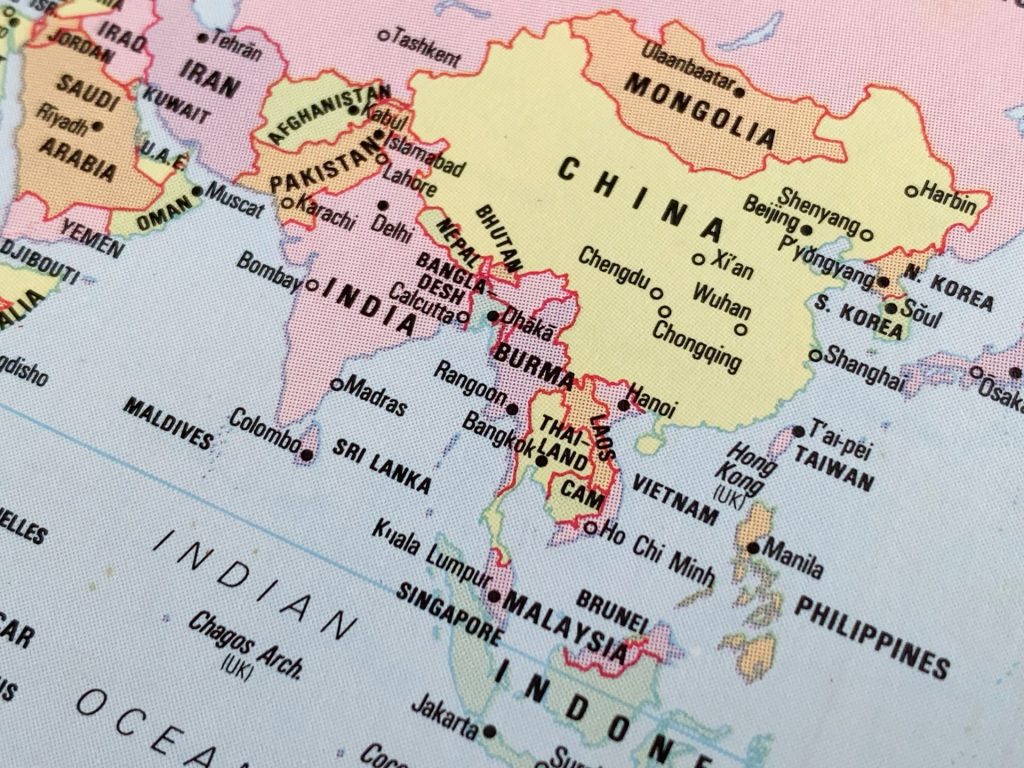
Countries across the Asia Pacific have been hit with a bewildering array of tariffs since US President Donald Trump returned to the White House in January 2025. Negotiations for tariff reductions have differed based on military realities and alliance politics, but many countries have largely acquiesced.
The European Union set this precedent by accepting the commercially disadvantageous US–EU trade agreement in July 2025, in the hope of keeping the United States engaged in defending Ukraine. Similarly, the Philippines, South Korea, Japan and Taiwan acquiesced to US tariffs and made investment pledges in the hope of preserving US defensive alliances against China. Australian commentators were angered by Trump’s tariffs, but the Albanese government offered little more than muted protest. Military considerations also factored into subdued acceptance by Malaysia and Singapore.
Before Trump’s second presidential term, the average US applied tariff rate against imports from the world was under 3 per cent. Trump’s April 2025 ‘Liberation Day’ tariffs imposed a jagged profile of applied US tariff rates against imports from different Asian countries.
Chinese exports faced the highest applied tariff rate at 28.8 per cent, followed by exports from Asian countries with no US military ties — Cambodia at 16.9 per cent, Indonesia at 12.1 per cent and Myanmar at 21.8 per cent. Only three Asia Pacific economies were eventually spared a sharp escalation in applied tariffs — Australia at 2.8 per cent, Singapore at 1.6 percent and Taiwan at 2.8 per cent) — all US military allies.
The jagged profile of US tariffs against Asia Pacific economies continued for the most part unchanged through the first half of 2026. Estimated applied tariff revenue as a percentage of total import value rose from 7.4 per cent in 2025 to 7.5 per cent across January–May 2026, as reported by the US International Trade Commission. Accordingly, imports from most countries paid marginally higher tariffs in 2026.
But for Cambodia and Myanmar, tariffs rose by several percentage points to over 22 and 26 per cent respectively. And for China, exemptions lowered the average tariff rate from 28.8 per cent in 2025 to 24 per cent across January–May 2026. New Zealand, the Philippines and Malaysia saw minor reductions of less than one percentage point in average US tariff costs relative to import values in 2026, which fell to 7 per cent, 6.2 per cent and 4.9 per cent respectively.
Different tariff rates for different countries obviously irritate the countries subject to higher rates. But apart from reduced imports from China, US import shares from other Asian countries have not been broadly affected by tariff differentials. Yet differentials and selective non-tariff barriers, such as Federal Communications Commission licenses for drone imports, do affect trade patterns for individual products.
Between 2025 and mid-2026, legal developments changed the statutes cited by Trump in building his tariff wall. After the ‘Liberation Day’ tariffs imposed under the 1977 International Emergency Economic Powers Act were declared unlawful by the Supreme Court in February 2026, the justification was swiftly replaced by invoking ‘balance of payments’ authority under Section 122 of the 1974 Trade Act. And when the 10 per cent tariffs imposed under Section 122 expired in July 2026, they were replaced by ‘forced labour’ tariffs under Section 301 of the same act.
Section 122 and 301 tariffs are now being challenged in the US courts and will likely be declared illegal, but final decisions cannot be expected before the end of 2027. Even if they are struck down, Trump may dust off at least one more statute to support his tariff wall — Section 338 of the 1930 Smoot–Hawley Tariff Act, which permits tariffs up to 50 per cent when a foreign country ‘discriminates’ against US exports.
When Trump leaves office in January 2029, tariffs at 2026 levels will likely remain in place. It is anyone’s guess whether his successor will gradually dismantle his tariff wall. The ill-informed jobs argument has proved a political winner for tariffs, though the consumer price argument cuts the other way.
Domestic politics aside, Trump’s tariff wall is being fortified by the Asia Pacific’s acquiescence. No Asian country has retaliated except China, nor have they formed a united front against Washington. Each country has instead moved unilaterally to cut its own deal, reflecting a mixture of military and commercial considerations.
US tariffs in the 7 to 11 per cent range have now proven durable, with outliers at higher and lower ends determined by geopolitics and military partnerships. It remains to be seen whether differences in applied tariffs will affect US import shares from Asian countries over the longer term. Trade shares have remained remarkably sticky thus far, despite the jagged profile of Trump’s tariffs.
While the US continues to blithely ignore the tariff commitments to which it is legally bound under international agreements, China is emerging as the true beneficiary. Beijing can now fairly claim to rank with defenders of the World Trade Organization and multilateral free trade. And while Chinese exports to the United States have dropped sharply, its exports to the world are at an all-time high. Xi Jinping could not hope for a better adversary than Donald Trump.
To read the full article as it was published by the East Asia Forum, please click here.
Get the Latest on Trade Policy Insights and Discussions