


WITA’s Friday Exchange Podcast: Gun Boat Diplomacy, Tariffs, and Geoeconomics

In the first episode of the New Year, former trade negotiators look at the nexus of national security, geopolitics and trade. They discuss the President’s National Security Strategy; Venezuela and the “Donroe Doctrine”; gun boat diplomacy and tariffs; and investment considerations for big oil. Our experts also discuss USMCA, WTO Reform, what we might see if IEEPA gets overturned (did someone mention Section 338?), and who has the leverage in trade with China.
Featured Speakers:
Introduction: Kenneth Levinson, CEO, WITA – The International Trade Membership Association
Wendy Cutler, Senior Vice President, Asia Society Policy Institute; former Acting Deputy U.S. Trade Representative, Office of the U.S. Trade Representative
Mark Linscott, Senior Advisor, The Asia Group; Senior Advisor, U.S.-India Strategic Partnership Forum; former Assistant U.S. Trade Representative for South and Central Asia, former Assistant U.S. Trade Representative for WTO and Multilateral Affairs, Office of the U.S. Trade Representative
Daniel Mullaney, Non-Resident Senior Fellow, Atlantic Council; former Assistant U.S. Trade Representative for Europe and the Middle East, Office of the U.S. Trade Representative
Chris Padilla, Senior Advisor, Brunswick Group; former Under Secretary of Commerce for International Trade, Department of Commerce
Moderator: Joe Damond, Chair of International Trade Policy and Global Life Sciences, Crowell Global Advisors; former Deputy Assistant U.S. Trade Representative for Asia and Pacific, Office of the U.S. Trade Representative
Watch the Video on YouTube | Listen on Spotify or Apple Podcasts
National Security Strategy of the United States of America
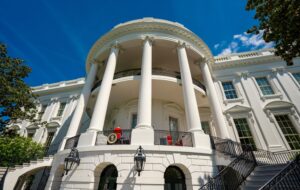
A “strategy” is a concrete, realistic plan that explains the essential connection between ends and means: it begins from an accurate assessment of what is desired and what tools are available, or can realistically be created, to achieve the desired outcomes.
A strategy must evaluate, sort, and prioritize. Not every country, region, issue, or cause—however worthy—can be the focus of American strategy. The purpose of foreign policy is the protection of core national interests; that is the sole focus of this strategy.
American strategies since the end of the Cold War have fallen short—they have been laundry lists of wishes or desired end states; have not clearly defined what we want but instead stated vague platitudes; and have often misjudged what we should want.
After the end of the Cold War, American foreign policy elites convinced themselves that permanent American domination of the entire world was in the best interests of our country. Yet the affairs of other countries are our concern only if their activities directly threaten our interests.
Our elites badly miscalculated America’s willingness to shoulder forever global burdens to which the American people saw no connection to the national interest. They overestimated America’s ability to fund, simultaneously, a massive welfare regulatory-administrative state alongside a massive military, diplomatic, intelligence, and foreign aid complex. They placed hugely misguided and destructive bets on globalism and so-called “free trade” that hollowed out the very middle class and industrial base on which American economic and military preeminence depend. They allowed allies and partners to offload the cost of their defense onto the American people, and sometimes to suck us into conflicts and controversies central to their interests but peripheral or irrelevant to our own. And they lashed American policy to a network of international institutions, some of which are driven by outright anti-Americanism and many by a transnationalism that explicitly seeks to dissolve individual state sovereignty. In sum, not only did our elites pursue a fundamentally undesirable and impossible goal, in doing so they undermined the very means necessary to achieve that goal: the character of our nation upon which its power, wealth, and decency were built.
11/30/2025 | The White House
Venezuela After Maduro: The Economic and Political Implications of Regime Change
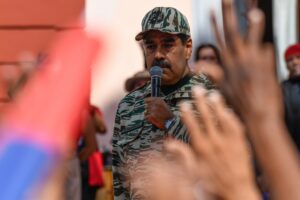
The following is an excerpt:
The removal of Nicolás Maduro was inevitable. The humanitarian catastrophe he presided over, the economic collapse he engineered, and the kleptocracy he commanded left no other path forward. Venezuela had become a textbook case of how not to manage a resource-rich economy, a cautionary tale of corruption, mismanagement and authoritarian control.
What remains uncertain is whether his removal marks the beginning of genuine reconstruction or merely the opening chapter in a prolonged period of instability. The oil reserves are real, the investment opportunities substantial, but so too are the political risks and governance challenges.
For investors, the calculus is clear: Venezuela offers potentially transformative returns, but only for those willing to tolerate extreme uncertainty and patient enough to wait years for payoffs. For policymakers, Venezuela is both opportunity and warning—a chance to support democratic renewal, but also a reminder that economic reconstruction requires far more than military intervention.
The next six to twelve months will determine whether Venezuela emerges as a post-conflict success story or descends into the kind of fractured, violent instability that has plagued Libya, Yemen and Syria. Either way, the world—and Europe—will be watching closely.
01/04/2026 | European Business Magazine
Who Will be the MC (Master of Ceremony) of MC14?

Following is an excerpt:
The WTO is the house of comparative advantage. It should practice it.
The facts are well-known. As of April 2, 2025, with the advent of “Liberation Day”, the rules-based system established by the U.S. and its allies at the aftermath of WWII is in retreat, in deep, meaningful withdrawal that is, with no obvious way back. The shibboleth of the Trump Administration trade policy so far can be summed up in other word: unpredictability. What do against this background should find its way into the agenda of MC14. The comparative advantage of the WTO delegates is to sense the feasibility of proposals advanced. This is what they know best because of their repeat interaction with each other. But feasibility is a useless concept absent contextualization. Feasible proposals must also help address the real issues that have been plaguing multilateralism: is it possible to return to MFN trade? Is it possible to return to compulsory third-party adjudication?
Academia seems skeptical to say the least. Carvalho, Monte and Ornelas (2025) have persuasively claimed that in the absence of a hegemon, a return to a rules-based system is not in the cards. Echoing (and completing in a way) the “hegemonic stability theory” advanced by Kindleberger, the authors claim that the more realistic scenario in a world with no hegemon but with a few dominant players instead, is a return to a “power-based” system: none of the dominant players can impose its vision, and, as a result, they are all dis-incentivized to assume the requisite cost to do so. The likelier path forward to avoid a return to anarchy is the adoption of a “rules light” system, that is some retrocession of the current regime. This comes close to Mattoo, Ruta and Staiger (2025) who argued for “payments” to the dominant players (in the instant case, the U.S.) in order to persuade them that the “inside”- is better than the “outside option” (the exit from the regime). The “payment” could take the form of allowing for deviations from MFN.
In this vein, an adaptation of the bicycle theory would require from the trade delegates to ensure that feasible proposals should serve the overall objective of maintaining multilateralism (in some form): they should be looking into “payments” (“rules light”) to ensure that everyone stays on board. My two cents in this context is two-fold: retrocession from the current regime through the adoption of an optional clause when it comes to adjudication; and a change in the pay-offs of the current regime, through more active use of sectoral agreements.
12/09/2025 | Petros Mavroidis | International Economic Law and Policy Blog
WITA – We put the community in trade community.
Information about upcoming WITA and trade community events