


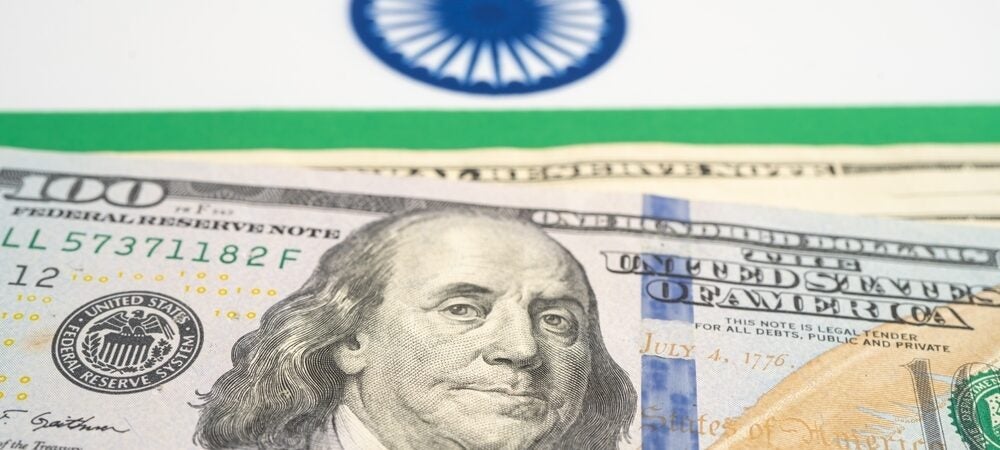
Trade agreements are meant to reduce uncertainty. The new U.S.–India framework does something more 2020s: it tries to tame the tail risk – the chance that geopolitics, not economics, suddenly re-prices India’s access to its most important export market.
That matters because Washington’s trade policy has changed character. Under Executive Order 14257, the United States explicitly treats large and persistent goods trade deficits as a national emergency – citing a U.S. goods deficit that reached $1.2 trillion in 2024 – and uses emergency-style tariff authority as the baseline, not the endgame. The joint statement with India then operationalizes that doctrine: the U.S. applies a reciprocal tariff rate of 18% to a set of Indian exports, while offering an off-ramp – selective tariff removals for “aligned partner” categories – if the interim agreement is successfully concluded.
From a textbook free-trade lens, this is messy: conditionality, discretion, and snapback logic. From a strategic trade lens, it is legible – and India’s choice is more defensible than critics will admit. India is not “surrendering” to a tariff-first America; it is negotiating inside the new regime to extract three things that matter for India’s next growth phase: (i) de-escalation insurance, (ii) targeted market access for high-value clusters, and (iii) a politically protected channel for capital- and technology-deepening imports (aircraft, compute, energy).
The bullish case, then, is not that this is a beautiful agreement. It’s that it is a pragmatic re-rating mechanism: India is buying stability in the U.S. market while turning part of the price (import rebalancing) into productivity-enhancing inputs. The caution is that the same machinery that reduces tail risk today can normalize leverage tomorrow – especially through the Russia–energy linkage.
Act 1: America’s tariff-first template meets India’s constraints—and India’s opportunity
Start with the structural mismatch. India is not a natural candidate for sweeping tariff liberalization. The WTO’s tariff data underline why: India’s simple average MFN applied tariff is 15.8% (2025), while its simple average bound tariff is 48.5% – a very large gap that preserves policy space for domestic politics and industrial sequencing.
That is precisely why the joint statement is economically meaningful. India agrees to eliminate or reduce tariffs on U.S. industrial goods and address a range of non-tariff barriers – medical devices, restrictive import licensing for certain ICT goods, and (crucially) a time-bound decision on whether U.S./international standards and testing will be accepted in identified sectors. In a typical Indian trade negotiation, these “behind-the-border” instruments are the real levers – because they govern how quickly competitive pressure hits domestic incumbents.
So why sign? Because the U.S. market is not merely “a destination”; it is the anchor for India’s export strategy. In 2024, the United States was India’s top export partner: $80.77bn of exports (about 18.25% of India’s total exports that year) in DGCI&S data, and similarly 18.3% in WTO/UN Comtrade-based figures. And India’s export mix is increasingly aligned with what the U.S. consumes at scale: electronics (including smartphones), pharmaceuticals, and gems/jewellery feature prominently.
This is where India’s win here is clearer than it first appears. The framework is explicitly designed to be a pathway – however conditional – to remove reciprocal tariffs on high-value categories such as generic pharmaceuticals, gems and diamonds, and aircraft parts, subject to successful conclusion of the interim agreement. These are not symbolic items. They sit at the intersection of India’s existing comparative advantage (generics), its big-ticket export ecosystem (gems/jewellery), and its ambition to climb industrial ladders via supply-chain integration (aircraft parts).
India’s second win is less headline-friendly but more economically important: the agreement forces a focus on trade “plumbing” – standards, conformity assessment, and licensing. In a world where tariff differentials are often smaller than compliance frictions, a credible reduction in regulatory uncertainty can do more for investment than a few percentage points of duty.
But there is a real loss embedded in the same architecture: predictability is conditional, not guaranteed. The joint statement openly states that if either side changes agreed tariffs, the other may modify its commitments. That is a polite way of saying “this is enforceable leverage, not a rulebook.” India gains an off-ramp from escalation, but it is not yet locking in treaty-grade certainty.
The $500bn import intent: feasible—but only if India treats it as a portfolio, not a vow
One of the most controversial lines is India’s stated intent to purchase $500 billion of U.S. goods over five years – energy products, aircraft and parts, precious metals, technology products (including GPUs and data-center goods), and coking coal. That is roughly $100bn per year, more than double India’s recent annual imports from the U.S. (about $44.4bn in 2024). The fiscal-year perspective tells a similar story: FY2024–25 exports to the U.S. were about $86.5bn and imports about $45.3bn, implying a large bilateral surplus in goods. If imports rise toward $100bn/year without a commensurate export rise, India would be deliberately compressing – and potentially flipping – that bilateral balance.
Here is the key point, though: the composition of the pledge makes it operationally plausible without blowing up India’s macro accounts – if India executes it mainly through diversion from other suppliers and concentrates incremental imports in productivity-raising capital goods.
India’s import structure is already dominated by categories that can absorb very large supplier shifts. DGCI&S shows mineral fuels (HS-27) alone were 31.38% of India’s 2024 import bill, with total imports at $718.16bn. The top 20 commodity groups include large, scalable buckets: mineral fuels, precious metals/stones, electronics, machinery—and aircraft/parts. In other words, India can “find” $100bn/year in U.S. purchases largely by reallocating procurement inside categories it already buys at massive scale – especially energy and some capital goods.
The numbers also reveal why the Russia clause matters for feasibility. In 2024, Russia was India’s second-largest import partner at $65.73bn (about 9.15% of imports), while the United States was fourth at $44.42bn (about 6.19%). If India reduces Russian-sourced energy and increases U.S. energy, the arithmetic of the $500bn target becomes far less fanciful – though the economics then depends on relative pricing, shipping, and contract terms.
India’s win here is that parts of the import basket are not consumption indulgences; they are capital deepening. Aircraft and parts raise connectivity and productivity, while GPUs and data-center goods are the modern equivalent of industrial machinery – inputs into India’s digital and AI stack. Done right, some of the “managed trade” optics can be converted into productive capacity that strengthens India’s services exports and tech ecosystem.
India’s risk is that purchase pledges are famous for becoming procurement distortions. If the commitment is interpreted bureaucratically – as a quota to be filled – India could end up buying higher-cost barrels, overpaying for certain capital goods, or crowding out more efficient suppliers. The only economically intelligent way to operationalize the $500bn line is to treat it as a portfolio strategy: diversify energy on value-for-money terms; modernize fleets where it aligns with domestic aviation growth; and prioritize compute and advanced equipment that relax binding constraints on productivity.
Trade balances: bilateral optics are easy; macro constraints are real but manageable
India can rebalance bilaterally with the U.S. without destabilizing its overall external position only if most of the import surge is diversion rather than net-new demand – and only if productivity imports ultimately support export capacity.
The macro context is not fragile, but it is not free. India’s current account can stay contained when services receipts are strong, even with a large goods deficit. RBI data for Q1 FY2025–26 show a current account deficit of $2.4bn (0.2% of GDP) alongside net services receipts of $47.9bn, even as the merchandise trade deficit was $68.5bn. That is the macro “buffer” India has earned – but it is also a reminder: goods deficits are large, and energy prices (and now energy geopolitics) still set the volatility.
Agriculture and MSMEs: the distributional politics India must manage, not deny
Trade deals don’t fail in aggregate; they fail in constituencies. Agriculture and MSMEs are where India’s domestic political economy is most likely to bite.
On agriculture, the joint statement indicates India will address non-tariff barriers affecting U.S. food and agricultural products. Even if India tries to avoid the most politically radioactive sectors at first, the opening of channels through standards, testing, and SPS-style disciplines can be more consequential than tariff cuts. The fights, in other words, won’t just be at the border; they’ll be inside domestic regulatory regimes – and those fights tend to be quieter, more technical, and therefore harder to manage politically once they start.
For MSMEs, India faces a more uncomfortable asymmetry. The U.S. reciprocal tariff at 18% explicitly covers categories such as textiles/apparel, leather/footwear, home décor and artisanal products – precisely where India’s employment intensity is high and margins are thin. India’s win is that cheaper imported machinery and intermediate inputs can lift competitiveness for MSMEs that survive and scale. India’s risk is that the adjustment burden falls on labour-intensive exporters unless India can negotiate durable relief—or compensate through domestic productivity and logistics improvements that restore margins.
The key policy implication is simple: if India is paying an “insurance premium” in tariffs and regulatory concessions, it must also invest in adjustment capacity – standards infrastructure, compliance support, MSME credit, logistics, and targeted transition mechanisms. Otherwise, the political backlash will be predictable and the economic gains will be truncated.
Act 2: Energy autonomy, Russia, and the economics of de-risking
The most geopolitically charged feature is not merely hinted—it is written explicitly into U.S. executive action. The executive order accompanying the trade deal eliminates the additional 25% ad valorem duty that had been imposed on India because India was “directly or indirectly” importing Russian oil, citing India’s commitment to stop such imports and instructing U.S. agencies to monitor whether India resumes them, with a recommendation pathway to reimpose the 25% duty if it does.
This is a structural change in India’s external economic environment: market access is being tied to third-country energy behaviour with a monitoring-and-snapback mechanism. It is tempting to treat this as a pure loss of strategic autonomy. The more accurate reading is that it is a trade-off between price optionality and channel security.
That linkage is novel for India: export-market access conditioned on third-country energy purchasing, backed by surveillance and snapback. It is also easy to misread. The clause narrows one dimension of autonomy – India’s ability to arbitrage discounted Russian barrels without penalty risk – but it does not mechanically “break” the wider India–Russia relationship, which is larger than a single commodity line and embedded in longer-lived strategic and industrial realities.
Start with the scale. Bilateral trade between India and Russia reached a record $68.7bn in FY2024–25, comprising $63.84bn of Indian imports from Russia and $4.88bn of exports—almost entirely dominated by energy and other commodity inputs, but not reducible to oil alone. The relationship is also “sticky” in the way trade economists mean it: defense platform legacies, spares and maintenance ecosystems, and long-cycle strategic cooperation do not unwind simply because one procurement stream becomes politically expensive. In short, this executive-order constraint targets the most sanction-exposed channel—crude oil—while leaving large room for continuity in the broader partnership.
The real strategic question, therefore, is not whether India will remain close to Russia. It is whether India can shift the energy mix without surrendering the economic logic that made Russian barrels attractive in the first place: optionality in tight markets. For a large energy importer, discounted supply is not just a commercial win; it can be a macro stabilizer. The loss here is that India’s ability to exploit that option has acquired a tariff price tag in its most important export market.
India’s loss is real: Russia-linked energy was not just geopolitically awkward; it was also a source of discount optionality in tight markets. Surrendering the ability to arbitrage discounted barrels during shocks raises India’s exposure to global price cycles, unless India builds compensating flexibility through diversified sourcing and storage.
But India’s win is underappreciated: channel risk matters. Payments, shipping, insurance, reputational constraints, and the prospect of secondary sanctions all create friction costs that don’t show up neatly in the landed price of a barrel. In a world where export platforms depend on financial and compliance stability, reducing those frictions can raise India’s investability and reduce the probability of sudden external-account stress. The executive order itself explicitly ties tariff relief to India’s energy shift, planned U.S. energy purchases, and an expanded defence-cooperation framework-an unusually direct statement of how Washington is bundling economics and security.
The strategic way to square this circle is not to pretend the linkage doesn’t exist; it is to build optionality elsewhere: long-term contracts with destination flexibility, diversified suppliers (including non-Russia), and a procurement strategy that treats energy security as a portfolio optimization problem-not as a binary alignment choice.
Act 3: Why this is not like India’s other FTAs—and why that may be the point
India’s FTAs and CEPAs-whatever their flaws-are built on a recognizable institutional logic: scheduled tariff reductions, rules of origin, and mechanisms that allow firms to price investments over long horizons. This U.S.-India framework is structurally different because it is anchored in U.S. executive-order tariff authority, with relief offered conditionally via “aligned partner” procedures, and with explicit snapback symmetry in the joint statement itself.
That is a downgrade in legal elegance. But it may be an upgrade in political feasibility. The United States is not currently in a mood for classic, comprehensive FTAs. India’s decision to proceed through an interim framework is, in that sense, a realist’s move: secure a pathway now, then try to convert discretion into durability over time.
India’s win here is speed and positioning. This framework explicitly places economic security alignment, supply-chain resilience, and cooperation on investment reviews and export controls inside the bilateral trade agenda. In the current global regime, “trusted partner” status is increasingly the gatekeeper for technology access and high-end supply chains. India is trying-quite consciously-to use trade concessions to strengthen that positioning.
India’s risk is template contagion. If India’s largest trade relationship becomes governed by discretionary relief and geopolitical monitoring, other partners may learn the lesson and attempt their own issue linkages-climate conditionality, labour clauses with punitive enforcement, procurement pledges dressed as “commitments.” That would complicate India’s broader objective: being seen as a stable, rules-based platform even in a fractured world.
A more bullish but honest verdict: India is arbitraging the world as it is—now it must execute like it
The clean critique of this deal is easy: it is not rules-based free trade; it is conditional, managed, and strategically entangled.
The more useful assessment is that India is making a calculated bet. It is paying in three currencies – tariff reductions, regulatory concessions, and import rebalancing – in exchange for (i) reduced tariff-escalation tail risk in its key export market, (ii) a pathway to carve-outs for high-value clusters like generics, gems/diamonds, and aircraft parts, and (iii) an explicitly sanctioned channel for importing the capital goods and compute that underpin the next phase of productivity.
India’s deeper challenge is not merely to manage this U.S. deal. It is to treat it as a signal about the world economy: market access is becoming contingent, political, and episodically weaponized. In that environment, the correct response is not to freeze trade policy. It is to diversify export markets faster than policy risk can accumulate, and to harden the external balance through services strength and broader goods-market access.
The concentration risk is visible in India’s export geography. DGCI&S data for 2024 show the United States absorbing $80.77 billion of India’s exports – about 18.25% of the total – making it India’s single largest export destination. That is a strength in good times, and a vulnerability when the anchor market shifts to a tariff-first doctrine. The lesson is not “less America.” It is “more everywhere else.”
Encouragingly, India has already begun acting on that logic – partly because tariff risk has been rising. Reporting on India’s export performance in the first half of 2025 notes a meaningful shift in destination strategy as exporters responded to looming U.S. tariff threats by pushing harder into alternative markets. And the policy superstructure is moving in the same direction: India has been accelerating trade agreements and market-access negotiations at a pace that looks less like incrementalism and more like deliberate hedging. India’s UK agreement has been signed and documented by the UK government. India has also signed a CEPA with Oman as part of a broader push to widen preferential access and reduce exposure to U.S. tariff volatility. And India and the EU have announced the conclusion of a landmark FTA after a rapid acceleration of talks—an agreement explicitly framed as strategically significant in a tense geopolitical economy.
This is where India can – and should – convert “newfound uncertainty” into leverage. If the U.S. is signalling that market access will increasingly come with conditions, India’s rational response is to multiply outside options: deepen preferential access into the EU and UK; consolidate Gulf corridors (where both energy and remittance/service channels matter); and keep pushing into other markets where India’s goods and services exports can scale. The macro logic is straightforward: India’s external stability depends on the services surplus and resilient capital flows to offset a structurally large goods deficit; widening market access reduces the probability that a single partner’s tariff cycle destabilizes that equation.
The world has moved from “free trade” to “strategic trade.” India’s comparative advantage in this era will not come from pretending otherwise. It will come from doing something harder and more interesting: using strategic alignment selectively to buy stability, technology, and scale-while building enough domestic resilience that alignment remains a choice, not a trap.
To read the full article as it was posted on LinkedIn, click here.