


Disclaimer: This article was originally published prior to the outbreak of the Iran war in February 2026 and may not reflect current geopolitical developments.
TL;DR
When we talk about Iran or Venezuela today, it’s tempting to reduce the story to politics or security headlines. But at the most structural level, these situations are about oil, its role in the global economy, and how that connects to money, markets, and geopolitical power.
Understanding this history helps explain the present. When tensions flare in the Middle East, when sanctions target energy exports, when shipping lanes are threatened, markets react instantly. That reaction is not irrational, it is rooted in a century of precedent. Oil has repeatedly shaped the balance of power, determined strategic alliances, and influenced the architecture of global finance. It remains one of the clearest lenses through which to view the world order.
Oil isn’t just another commodity. For the past half-century, it has been central to global finance and geopolitics, both as a physical source of energy and as a pillar of the world monetary system. Energy has powered not just engines and factories, but the rise and fall of nations.
Why Oil Used to be the Ultimate Lever
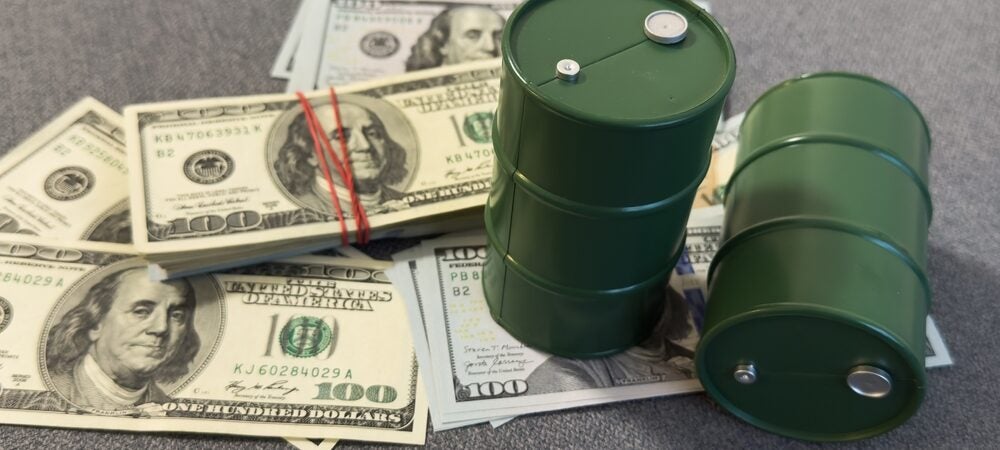
After the collapse of the Bretton Woods gold convertibility system in the early 1970s, the United States struck a series of arrangements, most importantly with Saudi Arabia to price oil in US dollars. Because oil was priced in dollars worldwide, countries needed to hold dollars to trade energy. That surplus demand kept the dollar strong, sustained its reserve status, and underpinned American economic influence for decades. The petrodollar was effectively a way for the U.S. to export liquidity and import leverage.
But that system relies on two assumptions:
1. Oil is priced and traded globally in dollars
2. Dominant producers remain aligned with the U.S.
When either of those shifts, the balance of global economic power shifts with it.
Oil and War: A Brief History
At the start of the twentieth century, energy shifted from coal to oil. When Winston Churchill made the decision to convert the British navy from coal to oil before World War I, he made Britain faster and militarily superior, but also strategically dependent. Britain did not have large domestic oil reserves, which meant securing supply from Persia and Mesopotamia became a matter of national survival. After World War I and the collapse of the Ottoman Empire, the political map of the Middle East was redrawn in ways that conveniently aligned with energy interests. Oil did not cause the war, but it shaped the peace that followed.
By World War II, oil was no longer just an advantage, it was oxygen. Nazi Germany, under Adolf Hitler, lacked sufficient domestic oil reserves. The drive toward the Caucasus and the Battle of Stalingrad were not only ideological campaigns, they were strategic attempts to seize Soviet oil fields. When those efforts failed, Germany’s war machine began to suffocate. At the same time, Japan faced crippling American oil embargoes in 1941. Cut off from fuel imports, Japan calculated that securing oil fields in Southeast Asia was essential, a decision that led directly to the attack on Pearl Harbor. In both theaters, access to oil shaped strategy, escalation, and ultimately outcomes. Industrial war could not be fought without energy.
The postwar era did not reduce oil’s importance, it deepened it. In 1973, during the Yom Kippur War, Arab oil producers launched what became known as the 1973 Oil Crisis, cutting supply to countries that supported Israel. Oil prices quadrupled, inflation surged, and Western economies plunged into recession. For the first time, oil was explicitly used as a geopolitical weapon. The shock led to the creation of strategic petroleum reserves, a renewed focus on energy security, and a strengthening of the petrodollar system, where global oil trade remained priced in US dollars, reinforcing American financial dominance.
On August 2 1990, Iraqi forces launched a surprise attack against Kuwait and quickly overran the country.
The Gulf War of 1990 followed a similar logic. When Saddam Hussein invaded Kuwait, it was not just territorial expansion, it was control over a significant share of global oil reserves. Had Iraq consolidated control over both Iraqi and Kuwaiti oil, it would have commanded enormous influence over global supply. The swift international response reflected a broader strategic principle, no hostile power would be allowed to dominate the Persian Gulf’s energy resources. Oil once again defined the red lines of global order.
Even in more recent conflicts, energy leverage has remained central. Europe’s dependence on Russian oil and gas shaped its strategic calculations for years. Sanctions, supply disruptions, and the scramble to diversify energy sources show how deeply intertwined geopolitics and energy remain. Meanwhile, countries like Iran and Venezuela, both holding vast reserves, have used oil as a diplomatic and financial tool, building alternative trade networks and bypassing traditional Western financial systems. Energy flows are never just commercial transactions, they are strategic alignments.
Across these examples, a pattern emerges. Oil concentrates in specific geographies, which creates chokepoints and leverage. Modern economies and militaries require continuous energy supply, which turns access into a security imperative. And because oil trade has historically been priced in dollars, energy markets have reinforced the global monetary system. Control over oil flows has meant influence over capital flows.
Iran and Venezuela
Iran and Venezuela are not fringe players with inconsequential output. They rank among the largest holders of proven oil reserves in the world. Iran exports large volumes of crude, a large share historically going to China despite sanctions by using discounted barrels and creative shipping channels. Venezuela holds the largest proven reserves globally and for years sent most of its exports to China on oil-backed credit programs and barter arrangements with political allies.
Both nations have leveraged oil not just as an export product but as a tool of foreign policy, an instrument to build alliances, secure credit lines, and structure geopolitical relationships outside the traditional dollar system. Venezuelan oil deals with Cuba, China, Russia, and Iran, and over the past two decades they cemented political alignment while bypassing conventional markets.
Recent geopolitics, starting with heightened tensions around Iran to the U.S. intervention in Venezuela, is often framed in terms of security or democracy. But if we look at the oil markets, a deeper logic emerges. Sanctions on Iran and Venezuela were partly designed to disrupt their ability to trade oil freely, which implicitly squeezes any challenge to dollar-denominated energy trade.
Yet, China and other buyers found ways to keep the crude flowing, sometimes through shell companies, shadow fleets of tankers, and indirect routes to clarify the origin. These workarounds show that global demand, especially from Asia, remains structurally tied to discounted barrels even when official channels are blocked.
Now, with recent military actions and geopolitical tension, several dynamics are converging. Supply dynamics have tightened, especially around the Strait of Hormuz, a chokepoint for roughly 20% of global oil shipments. China has publicly vowed to safeguard its energy security in light of disruptions, underscoring how essential stable oil flows are to its economy. Russian, Iranian, and Venezuelan oil ties have historically helped these countries maintain alternative networks outside Western financial and trade systems. In this context, oil becomes the economic common denominator linking seemingly divergent events in Tehran, Caracas, Beijing, and Washington.
From a U.S. strategic perspective, Iran and Venezuela are not just problematic regimes. They are large oil producers operating outside the U.S. financial system, selling discounted barrels to China, building alternative trade routes, and reducing the centrality of dollar settlement in energy markets. If oil trade shifts meaningfully away from the dollar, it weakens one of the quiet pillars of American power, the ability to run deficits cheaply, impose sanctions effectively, and project financial influence globally. Oil is not the only variable in U.S. policy toward Iran and Venezuela, but it is one of the structural incentives that quietly shapes the boundaries of what Washington will tolerate.
Sanctions on Iranian and Venezuelan oil are not only about punishment. They are about control over supply, price stability, and preserving the architecture of dollar based energy trade. Seen through that lens, pressure on Iran and Venezuela is not random or purely ideological. It sits inside a long tradition of preventing hostile or misaligned powers from dominating key energy nodes or building parallel systems.
Oil, the Dollar, and Global Trade
Because oil was central to the dollar’s dominance, any major shift in how oil is priced or sold, especially outside dollar clearing systems, is a challenge to U.S. economic power. Attempts to sell oil in other currencies or barter oil directly for industrial goods are not merely commercial decisions, they’re structural currency wars in action.
For example, Iran has long explored non-dollar oil trade and even established an oil bourse intended to price crude in other currencies. While that initiative never overtook the global market, it points to a long-standing strategy of seeking alternatives to the dollar system.
Venezuela’s earlier attempts to price oil in yuan mattered not because it was a particularly efficient macroeconomic move, but because it threatened the monopoly of dollar pricing for petroleum. That system has anchored the structure of global trade and finance for decades
The Puzzle in Perspective
So why is oil a key piece in the puzzle we’re unpacking today? Energy supply underpins economic activity. Disruptions radiate through markets faster than almost anything else. Oil pricing and trade systems are intertwined with reserve currency status, a shift here has implications for capital markets and global liquidity. Iran and Venezuela exemplify the geopolitical interplay between sanctions, alternative networks, and great-power rivalry. China’s continued purchase and integration of sanctioned oil, even if unofficially, shows that emerging powers are not only consumers but shapers of new trade and payment systems.
Understanding oil is not just about commodities, it’s about the architecture of global economic power.
Closing Thoughts
The world is not fighting over oil in the same way it did in 1942. But oil still sits at the center of the system that finances armies, stabilizes currencies, and anchors global trade. When we watch Iran, Venezuela, China, and Washington maneuver, we are not just watching politics. We are watching a struggle over who controls the pipes of the global economy.
To read the full article as it was posted by Unpacking the Present on Substack, please click here.