



WITA’s Friday Exchange Podcast: Trade as Economic Statecraft, Greenland, Trade Bazookas, Davos Deals, and the Silicon Shield
In the latest episode of the Friday Exchange, former negotiators talk us off the ledge as the US and its European allies reach an agreement in Davos to turn down the temperature in the battle of the North Atlantic. They also talk about the use of tariffs and trade as economic statecraft, the implications of trade deals between the US and Taiwan, Canada and China, and glimpse a possible path forward on WTO reform.
Featured Speakers:
Introduction: Kenneth Levinson, CEO, WITA – The International Trade Membership Association
Kate Kalutkiewicz, Trade Practice Lead, McLarty Associates; former Special Assistant to the President and Senior Director of Trade Policy, White House National Economic Council; former Director for European Affairs, Office of the U.S. Trade Representative
Daniel Mullaney, Non-Resident Senior Fellow, Atlantic Council; former Assistant U.S. Trade Representative for Europe and the Middle East, Office of the U.S. Trade Representative
Sara Schuman, Managing Director and International Trade Practice Lead, Beacon Global Strategies; former Senior Trade Representative, Office of the U.S. Trade Representative
Mark Linscott, Senior Advisor at the Asia Group and the US-India Strategic Partnership Forum; former Assistant USTR for South and Central Asia and before that, Assistant USTR for WTO and Multilateral Affairs
Watch the Video on YouTube | Listen on Spotify or Apple Podcasts
Recorded at 9:00 AM ET on 1/23/2026 | WITA
USMCA Under Review: Early Takeaways, Stakeholder Engagement, and the Year Ahead:

Featured Speakers:
Everett Eissenstat, Partner, Public Policy Practice Group, Squire Patton Boggs; former Deputy Assistant to the President for International Economic Affairs and Deputy Director, National Economic Council; former Assistant USTR for the Americas
Nancy Martinez, Director, Public Policy, Trade and Biotechnology, National Corn Growers Association
Tiffany Melvin, President, North American Strategy for Competitiveness (NASCO)
Mayur Patel, Partner, Hogan Lovells; former Chief International Trade Counsel, U.S. Senate Committee on Finance
Salvatore (Sal) Vetrini, Senior Counsel, FedEx Corporation
Moderator: Rory Heslington, Vice President of Government Affairs, Autos Drive America
Watch the Full Event Video Here
01/22/2026 | WITA
Unequal Treaties Revisited: Coercive Trade Agreements in a Fragmented Global Economy

During the ASEAN summit in October 2025, US President Donald Trump announced new trade deals with Malaysia and Cambodia, with framework agreements with Vietnam and Thailand expected to be finalized in the coming weeks. These arrangements, described as “Agreements on Reciprocal Tariffs” are premised on a clear strategic logic: countries that agree to apply US-aligned tariffs on Chinese exports, thereby effectively joining the United States’ economic confrontation with China, would see their own exports spared from US trade restrictions.
However, these agreements display a strikingly unequal character. Most provisions are framed in terms such as “Cambodia shall” or “Malaysia shall”, revealing a pronounced asymmetry in the allocation of obligations. There is an inequivalent distribution of commitments between the United States and its counterparties, particularly Cambodia. A closer examination of the treaty texts reveals several potentially problematic provisions.
For example, Article 2.12 of the Malaysia agreement and Article 2.11 of the Cambodia agreement both address “Border Measures and Taxes”. While the Malaysian provision states that “no Party shall contest at the WTO a measure adopted by the other Party”, the Cambodian provision goes significantly further. It explicitly stipulates that “Cambodia shall not contest, including through countervailing measures or at the WTO, any measure adopted by the United States to rebate or to refrain from imposing direct taxes in relation to exports from the United States”. Notably, this obligation is unilateral: the provision almost does not impose any corresponding restraint on the United States. Both agreements also contain a Section 5 on “Economic and National Security”, which reflects an additional asymmetry. Provisions in this section tend to promote security alignment and implicitly target third countries. For instance, Cambodia is required, “consistent with its sovereign interests”, to adopt and implement measures addressing “unfair practices” of companies owned or controlled by third countries operating within its jurisdiction (Article 5.1(2)).
Taken together, these provisions reveal the systematic asymmetry of obligations and constraints between the parties. Historically, unequal treaties were imposed on weaker states in East Asia during the nineteenth century. Following conflicts such as the Opium Wars (1839–1842; 1856–1860), Britain forced China into agreements such as the Treaty of Nanking (1842), which mandated the cession of territory, namely, Hong Kong, the opening of treaty ports, and extraterritorial privileges for foreign nationals. Similar arrangements were imposed on pre-Meiji Japan (1854 Treaty of Kanagawa) and Korea (signed with Japan after the Meiji Restoration, 1876 Treaty of Ganghwa), often under conditions of gunboat diplomacy.
These historical unequal treaties had distinct commercial dimensions. First, states such as China and Korea lost their autonomy over tariff-setting, with tariff levels fixed at low rates favourable to Western imports. Second, the inclusion of Most-Favoured-Nation (MFN) clauses locked weaker states into perpetual concessions, ensuring that any benefit granted to one Western power would automatically extend to all others.
01/21/2026 | Beichin Ding | Opinio Juris
Tariffs as a Weapon: When Trade Policy Becomes
Sovereignty Policy

Traditionally, tariffs are justified on three grounds: terms-of-trade manipulation, protection of infant industries, and retaliation in trade disputes. In all three cases, the objective is economic. The current episode surrounding Greenland is different in nature. Tariffs are no longer being discussed as a tool to alter relative prices or bargaining positions in trade negotiations, but as leverage to influence the territorial and sovereign decisions of allied states.
This is a qualitative shift.
In standard trade theory, tariffs operate through relative prices. A tariff raises the domestic price of an imported good, redistributes income from consumers to producers and the state, and generates deadweight losses. Retaliation magnifies these losses. The welfare analysis is well known and, in most cases, negative-sum.
However, when tariffs are used for non-economic objectives, the calculus changes. The relevant comparison is no longer between consumer surplus, producer surplus, and fiscal revenue, but between economic costs and geopolitical outcomes. In this sense, tariffs become closer to sanctions or coercive diplomacy than to trade policy.
01/20/26 | Michael Testa | Bloomsbury Macro
‘Trade is in our Blood’: Momentum Builds in Asia for Expanding Rules-based Economic Cooperation
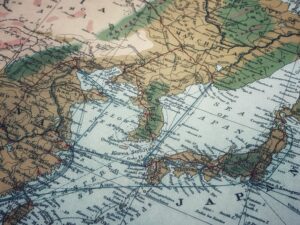
The trade world experienced unprecedented upheaval in 2025, but Asia still sees the rules-based trading system as the strongest foundation for its future. Trade is “in the blood” in Asia, and these countries continue to forge ahead with trade arrangements with multiple partners—so-called plurilateral trade arrangements—to further integrate their economies, provide certainty for businesses, promote innovation, and enhance economic growth.
However, it has not been all smooth sailing, particularly at a time when evolving trade policy of the United States is demanding significant attention from all economies. Regional plurilateral agreements, such as the Comprehensive and Progressive Agreement for Trans-Pacific Partnership (CPTPP) with 12 parties and the Regional Comprehensive Economic Partnership (RCEP) with 15 parties, have brought benefits to their members; however, to remain relevant, they need to be updated to keep pace with emerging developments. For the CPTPP, this has not been easy given its broad membership with diverse interests that hampers progress toward consensus on ambitious upgrades. Expanding the membership of these agreements or even instituting novel dialogues with other trading blocs as the CPTPP has started with the EU and ASEAN, not only provides opportunities to access new markets and expand integration but also sends an important signal in support of rules-based trade at this critical time.
Asia should not be complacent with the trade rules already in place. The region would benefit from harnessing the current moment when countries are focused on diversifying markets and suppliers to pursue new plurilateral cooperation and agreements in specific sectors, or to address specific trade challenges, such as critical minerals, an economic security framework, or green technology. The first two of these in particular are of interest to the current U.S. administration, though Asian countries would also need to consider how China might view any new arrangements. Importantly, countries are more willing now to consider formats other than legally binding comprehensive agreements to support greater economic integration with like-minded partners, such as agreed principles, guidelines, or concrete areas of cooperation to unlock trade and bring benefits to stakeholders, such as the new Future of Investment and Trade Partnership (FITP).
While the current global trading context provides impetus for progressing plurilateral initiatives that deepen economic integration among partners, one challenge is the lack of an obvious leader in the region—country or person—to drive such initiatives forward. A group of like-minded countries, such as Australia, Japan, Republic of Korea, and Singapore, could step up and lead the charge in support of increased plurilateral integration and the rules-based system. However, even with the best of intentions, countries will be constrained by their own limited resources for trade negotiations and implementation, while developing countries in particular need capacity building, including from high-quality investments, to make any trade deal successful.
01/20/2026 | Jane Mellsop | Asia Society Policy Institute
WITA – We put the community in trade community.
Information about upcoming WITA and trade community events