



WITA’s Friday Exchange: Walking the Tightrope: China Summit fallout, a Board of Trade, and What’s “Sensitive”?

The discussion also explored the growing tension between economic security, industrial policy, and geopolitical competition. Panelists debated how new Section 301 and 232 actions against China fit alongside efforts to carve out “non-sensitive” areas for cooperation, while allies and trading partners from Southeast Asia to Europe navigate the fallout from shifting U.S.-China trade dynamics.
Sara Schuman, Managing Director and International Trade Practice Lead, Beacon Global Strategies; She was the Senior Trade Representative for China at the Office of the U.S. Trade Representative; former Minister Counselor for Trade Affairs, U.S. Embassy in Beijing during the first Trump and Biden Administrations.
Watch the Video on YouTube | Listen on Spotify or Apple Podcasts
Recorded at 9:00 AM US/ET on 05/22/2026 | WITA – The International Trade Association
WITA International U.S.-India Intensive Trade Seminar

WITA International and the WITA Academy hosted a three-day Intensive Trade Seminar exploring key aspects of the the Indian economy, and U.S.-India and global trade relations. Over three days, speakers helped attendees increase their professional knowledge of India and global trade directly from business leaders and career trade policy professionals from India, the United States, other countries around the world.
- Day 1: Strategic Context & Trade Relations
- Day 2: Competitiveness, Market Access & Digital Trade
- Day 3: Challenges and Opportunities – Sectoral Deep Dives
This event was free to attend thanks to the support of our WITA International and WITA Academy sponsors.
05/19/2026 – 05/21/2026 | WITA – The International Trade Association
The Beijing Summit Rewrites The Rules Of Superpower Economic Engagement
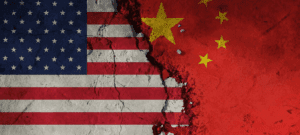
The conclusion of the high-stakes Beijing summit between U.S. President Donald Trump and Chinese President Xi Jinping on May 14 marked a critical pivot in the structural architecture of the international system.
This meeting matters profoundly because it introduces an unexpected floor to a relationship that many analysts predicted would enter a terminal downward spiral under a second Trump administration. Rather than a standard diplomatic gridlock, the summit produced a relatively coherent framework for what Beijing is calling constructive strategic stability.
For global policymakers and volatile international markets, the event signals a systemic pause in aggressive economic fracturing, proving that both capitals are currently prioritizing domestic economic insulation over unmanageable geopolitical escalation.
According to the dominant media narrative prior to the summit, Washington and Beijing were marching deterministically toward total economic separation and inevitable military conflict. This view has been proven to be overstated. The Beijing summit revealed a highly calculated, deeply pragmatic effort by both sides—predominantly by China—to engineer a general reconciliation on virtually all structural matters, with the deliberate exception of Taiwan.
By systematically decoupling trade, technology, and global governance from the combustible issue of cross-strait sovereignty, Beijing has successfully offered the Trump administration a transactional, high-yield partnership. This strategy appeals directly to Washington’s preference for bilateral deal-making while preserving China’s core national red lines. Comprehending this shifting dynamic requires an examination of the systematic mechanics of the reconciliation effort through a clear, analytical framework driven by distinct structural pillars.
05/19/2026 | Dr. Imran Khalid | Eurasia Review
CPTPP–EU Cooperation Can Set The Pace For Global Trade
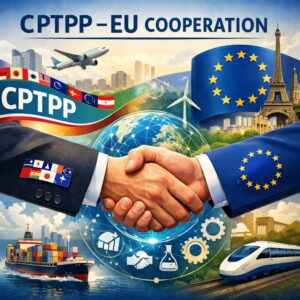
Following are excerpts:
The causes of WTO stagnation are many, but the difficulty of rule-making resembles a classic collective action problem. The benefits of MFN-based rule-making tend to be broadly and thinly distributed, creating incentives for members to free-ride, while the additional political and economic adjustment costs of liberalisation, regulatory change and reduced domestic policy flexibility are more likely to be concentrated in particular countries and sectors. With many members, each with diverse interests, the coordination costs of consensus-based decision-making are higher, making WTO-wide agreement harder to reach.
One way to ease this collective action problem is to let the countries that are willing to bear the domestic adjustment costs of introducing new rules design and test them first. First-mover benefits such as influence over rule-making and regulatory connectivity can help offset some of these domestic political and economic costs. CPTPP members and the European Union face common challenges — economic coercion by major powers and stalled WTO processes — that give them strong incentives to advance rule-making through practical cooperation.
…CPTPP–EU cooperation should not be judged solely by whether the European Union formally accedes to the CPTPP, or whether the two sides negotiate an agreement involving tariff elimination. The European Union already has trade agreements with many CPTPP members, but achieving the kind of flexible supply chains across the two frameworks that industry wants still requires difficult negotiations on rules of origin, including cumulation.
While deeper economic integration is worth pursuing, the realistic starting point is to build upon existing EU agreements with individual CPTPP members, align and update rules that address priority issues and develop necessary cooperation mechanisms. With EU and CPTPP members accounting for about 37 per cent of global trade, cooperation can help spur rule-making within and outside the WTO
05/16/2026 | Arata Kuno | East Asia Forum
Making Water Use In Global Trade More Sustainable

Water plays a vital but largely unrecognized role in the global economy. Today’s supply chains often rely on – and exacerbate – unsustainable water use. Reforming how water is used at every stage along supply chains is vital for enhancing environmental and community resilience, and for ensuring reliable flows of critical goods.
‘Virtual’ water – that is, the water used in supply chains to produce and deliver goods and services – is of huge but often unrecognized importance to the global economy, environmental sustainability, and social and community resilience. Take China, for example. Before it joined the World Trade Organization (WTO) in 2001, China imported 2 million tonnes of soybeans a year from Brazil. Today, Brazil exports over 50 million tonnes of soybeans a year to China.1 The expansion of this activity has massively increased water stress in the Amazon basin, the largest freshwater system on Earth.2 China is now the world’s largest importer of virtual water; external water resources account for one-third of the total water required to produce the goods and services that the country consumes each year.3 This in turn increases water use in supplier countries and has sustainability impacts on their communities and environments.
China’s strategy of, in effect, ‘outsourcing’ its water needs to other countries exemplifies how international trade can redistribute environmental benefits and harms globally. Growth in Chinese imports of soybeans (especially from the US and Brazil) and palm oil (especially from Indonesia and Malaysia) since the start of the century has conserved water in China but resulted in deforestation in locations such as Indonesia and the Brazilian Amazon. Soybean cultivation has historically contributed to significant deforestation in the Amazon, in turn affecting rainfall by reducing moisture released into the atmosphere – this has led to less rain, longer dry spells and increased drought risk. Although the pattern of China’s bilateral trade with Brazil has evolved in the past decade – Chinese demand for beef imports is now a more significant factor in Amazonian deforestation – cultivation of Brazilian soybeans to meet Chinese demand has continued. The industry has simply shifted location, predominantly to the Cerrado region of central Brazil, and continues to contribute to deforestation risk and environmental/social pressures associated with land-use change.
These trends pose significant risks to Brazil’s domestic water users, who are reliant on the same resources for household use, industry and energy generation. The health and resilience of Brazil’s water resources are also critical to ecosystem integrity. At the same time, depletion and degradation of these resources are of concern to Brazil’s trading partners, for whom heavy dependence on any one supplier creates strategic supply-chain vulnerabilities. Risks in Brazil mean risks for its customers in importing countries, as Brazil is a significant player in the global production of water-reliant commodities. Brazil holds 12 per cent of the world’s freshwater reserves. In short, Brazil’s systemic importance to global agricultural trade means that a water crisis in the country could rapidly affect commodity supplies and prices worldwide.
Read the Full Research Paper Here
05/14/2026 | Leslie Morris-Iveson, Joe Ray, Richard King and Laura Kelly | Chatham House
WITA – We put the community in trade community.
Information about upcoming WITA and trade community events