


WITA’s Friday Exchange: Return of the Tariff Hammer? Presidential Trade Power and the Graham Russia Sanctions Bill

In this week’s episode, our trade insiders dug into the “Graham Bill” – the bipartisan, bicameral Russia sanctions bill and its open-ended tariff authority. They debated its potential trade repercussions, whether tariffs or targeted export controls are the more effective tool, and whether placing tariffs on allies drives wedges rather than results. They also examined the administration’s broader push to reconstruct a tariff regime reminiscent of the IEEPA era, Brazil’s Section 301 case as a possible preview of what’s ahead, stalled negotiations with India, Vietnam’s own Section 301 investigation, and why trading partners may be slow-walking talks. The episode also returned to a broader question running through the discussion: will Congress take steps to reclaim its trade authority, or continue delegating authority to the Executive?
Featured Speakers:
Blake Harden, Managing Director, Washington Council Ernst & Young; previously served as Trade Counsel on the House Ways & Means Committee; and in the office of the Chief Counsel at U.S. Customs and Border Protection
Mayur Patel, Partner, Hogan Lovells; former Chief International Trade Counsel, U.S. Senate Committee on Finance
Neena Shenai, Partner, International Trade Investment and Market Access, WilmerHale; former Trade Counsel, House Committee on Ways and Means
Moderator: Mike Smart, Managing Director, Rock Creek Global Advisors; former Director for International Trade and Investment, National Security Council, The White House; former Trade Counsel, Democratic Staff, U.S. Senate Committee on Finance
Watch the Video on YouTube | Listen on Spotify or Apple Podcasts
Recorded at 9:00 AM US/ET on 06/17/2026 | WITA – The International Trade Association
Superpower AI Rivalry Reshapes Global Technology Governance
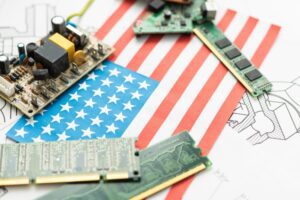
The Trump administration’s attempt to stop the import of Chinese artificial intelligence (AI) and Chinese restrictions on the export of frontier models are developments of great significance to the global digital landscape. Instead of an open and collaborative development of technologies for all of humanity, there is a new form of competition among countries to prevent others from accessing critical technologies to use against them. AI, once hailed as the future of humanity and a technological development to benefit everyone, is now viewed increasingly as a weapon of mass disruption that can be used to outcompete other countries.
The United States’ Executive Order also makes for a very interesting read. For the first time, the AI models developed by Chinese companies like DeepSeek, Qwen and GLM are characterised by the White House as nothing but systems for IP theft, propaganda and data mining. On the other hand, the United States also expanded its existing sanctions regarding the export of advanced semiconductors. This includes chips made by leading graphics card manufacturer Nvidia, such as the A100 and the newly released H100. These components are essential for the training of the so-called frontier models of AI. By banning their export, China’s ability to develop its own frontier models is severely curtailed. Chinese AI is therefore no longer welcome in the Western world. This also applies to all other countries, which are now also being implicated in strategic IP theft by working with Chinese AI.
China’s strategy mirrors the U.S. approach, with both countries operating in a spirit of strategic calculation. The restrictions placed by Beijing on the export of frontier models, including the Qwen2.5, DeepSeek V5, and GLM-6, all indicate that the country’s most advanced AI systems will be kept within its borders. Under a tiered system of regulation, the most basic models will be permitted for export, but those considered to be at the frontier of the field will be subject to a stringent security review before they are cleared for transfer abroad. As the United States attempts to starve China of semiconductors in a bid to strangle its AI ambitions, Beijing is working hard to achieve semiconductor independence to secure the future of its own AI systems.
The restrictions imposed by the two superpowers have, in the meantime, evolved into a restriction of imports and exports of frontier models. The global supply chain for AI of all kinds has become more restricted. The two major players in the world are cutting off the global supply of frontier AI models and, in this way, are in fact putting an end to cross-pollination of AI research between all nations. This will stifle innovation as it will lead to an overabundance of duplicate efforts, and the restriction of supply chains worldwide will furthermore have a negative effect on the efficiency of the global economy. Many countries are now forced into choosing a side between the Washington and the Beijing bloc and will become technologically dependent in the long run. Furthermore, they will no longer have a say in the worldwide standardization of technology and in the corresponding and far-reaching rules that will be decreed by Washington and/or Beijing.
07/13/2026 | Simon Hutagalung | Eurasia Review
It Takes More Than Two to Tango: Creating Effective Export Controls on Semiconductor Manufacturing Equipment
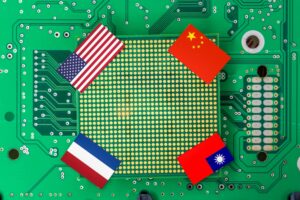
Export controls on semiconductor manufacturing equipment, the machinery needed to fabricate, test, and package semiconductors, are the most decisive instruments for constraining China’s ability to produce advanced and foundational chips. Yet, policy blind spots and the inconsistent implementation of export controls in the United States have left loopholes that China has exploited to accelerate its drive to undermine American compute advantage and dominate key industries, including the foundational chip market, which produces the “workhorses” of modern life, such as the chips found in cars and refrigerators. China is now poised to surpass Taiwan as the world’s leading foundational chip producer by 2027.
The effectiveness of export controls increases significantly when a concert of like-minded countries coordinates, implements, and enforces common objectives. This type of cooperation is called plurilateralism, and it involves a small group of participants (more than two, but fewer than most multilateral arrangements) targeting a narrow set of issues. During the Cold War, the Western bloc harmonized export controls via a plurilateral regime to prevent dual-use technologies from flowing to the Soviet Union and its satellite states. Today, the United States must rally semiconductor toolmaking allies and partners to pursue plurilateral controls that prevent China from accessing semiconductor manufacturing equipment (SME) critical for its capacity to conduct economic coercion, achieve global technological dominance, and militarily threaten democratic neighbors such as Taiwan.
The foundation for a new plurilateral regime is emerging in the U.S. Congress. In late April, the House Foreign Affairs Committee advanced the Semiconductor Technology Resilience, Integrity, and Defense Enhancement Act (H.R. 6058, “STRIDE Act”), along with 21 export control bills. The STRIDE Act would require the State Department to coordinate with allies and partners on aligning export controls across the semiconductor supply chain.
If enacted, the STRIDE Act would codify an American obligation to work with allies and partners on harmonizing export controls. It would also grant the United States the flexibility to employ complementary instruments of statecraft to incentivize cooperation.
07/09/2026 | Sylvia Chen & Peter Tozzi | Just Security
Thinking About the Trump Administration’s “Doctrine of Economic Statecraft”
Mohamed El-Erian, a professor at the Wharton School who was chair of President Obama’s Global Development Council, had a recent NY Times op-ed entitled “America Was Being Played. The Bessent Doctrine Says Those Days Are Over.” What he says in the piece is consistent with some thinking I have heard expressed now and then in recent years in relation to U.S. trade and foreign policy, from people on both the left and the right. I’ll say more about this at the end of the post, but I think there’s a good chance that, to some extent at least, this view is more reflective of the latest Washington policy narratives than it is of a permanent new direction in policy. But let me get into the specifics of the piece first.
At the outset, I want to say something about the title. In my view, America was not, in fact, “being played” by what the piece refers to as the “global economic system.” You can argue that the system had some flaws in it, and I can certainly point to many things I didn’t like. But the system was largely something U.S. policymakers wanted. If Bessent and the Trump administration don’t like it, that’s fine, and they have an opportunity at the moment to make some changes. But for the most part, the system that exists is an American-built system, and portraying the arrangement as other governments somehow taking advantage of America misunderstands how we got to where we are. I doubt many of these other governments believe they were the ones with the advantage, and they all have grievances of their own.
Turning to the substance of the piece, El-Erian puts forward “the five core principles that now underpin the administration’s doctrine of economic statecraft”:
- “National economic capacity is critical to economic security.”
- “Trade and investment openness must be strictly reciprocated.”
- “The United States must proactively set standards for emerging technologies.”
- “The global dominance of the U.S. financial system must be actively protected and leveraged as an instrument of statecraft.”
- “All of this must be aimed at visibly improving the welfare of American households.”
Let’s look at each one.
07/15/2026 | Simon Lester | International Economic Law and Policy Blog
WITA – We put the community in trade community.
Information about upcoming WITA and trade community events