


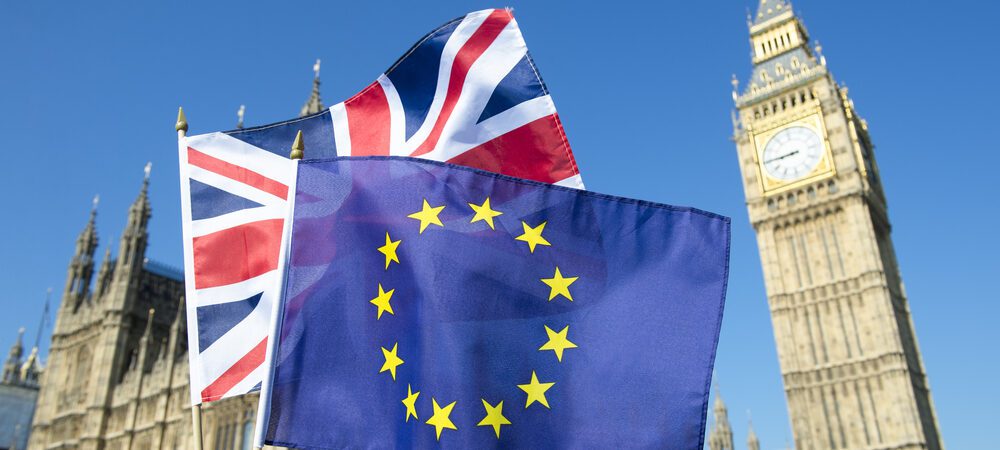
The UK had five Prime Ministers in the 35 years prior to the June 2016 EU referendum, since when it has had six which seems likely shortly to become seven. While correlation and causation are not the same, at the very least Brexit has not helped UK political stability. In particular it sent the leaders of a trading, inter-connected global economy into a nostalgic insularity from which it has yet to escape.
That 2016 vote is seen across Europe as the first major event in the continental rise in a nationalist populism driven by various factors including slow economic and living-standard growth, ageing populations, rising social media, declining manufacturing, and migration concerns. This is not however the predominant view of a UK commentariat which prefers to see the 52:48 decision as part of an ongoing argument about European integration that shouldn’t affect anything else.
Where this has led is UK politics as a rather warped variant of the Truman show in which simplistic answers are the attempted escape from talking about EU relations. Global trade deals can never be as deep or cover as much of the UK’s economy as EU relations. Inflation is persistently higher in part due to the loss of the flexible labour force that came from freedom of movement. Attempts to deregulate for growth run into a problem of that increasing trade costs with the EU, as well as bringing into question UK stability.
Successive governments have particularly taken from the referendum the view that migration must be controlled, have proclaimed that this is their priority, and then failed to deliver. There are obvious reasons for this, not least that a services economy with famous universities requires inbound movements, and that returning migrants to France is rather difficult outside of the EU. All of which brings UK politics into further disrepute as ever bigger promises are made and broken.
Both the Conservative and Reform parties now wish to leave the European Convention on Human Rights to reassert control, an act which would break treaties with the EU and more importantly the Northern Ireland Belfast / Good Friday Agreement. This would of course return the UK to the worst days of threats to the EU over walking away which have to be withdrawn when major business make it clear that this will mean withdrawing their investments.
Meanwhile Keir Starmer proclaims a reset in relations to put the UK back at the heart of Europe, but his government doesn’t want unlimited number of young people coming from the EU. Other negotiations are technical to align SPS and emissions trading schemes, and there are only vague aspirations for more alignment as a next step. No party has really come to terms with the modern inter-connected world as a constant constraint on policy making.
Clearly UK politics needs a reset. That polls have shown Starmer less unpopular in the UK than Macron in France or Merz in Germany just shows how challenging this will be. These are difficult days for the three former giants of European politics in particular, while formerly fringe countries such as Spain and Poland appear to be doing well even if still having problems with populism.
Changing global realities create the opportunity, perhaps even the imperative, to shake up domestic complacency. Populists will make their case that Trump’s chaos and the rise of China means more self-sufficiency and damaging controls, continuing current vicious cycles of discontent when these cannot be delivered. What is now needed are the brave leaders who can instead make the case for a better future where inter-dependencies are less a danger than an enormous opportunity for stable countries that emphasise the rule of law to be attractive business locations.
For the UK this should in particular start with politicians directly linking inward migration with greater opportunities across the country – for example through an expansion of universities and accompanying research facilities where provision is currently limited. Two other major changes should be a shift from ever greater regulation that prevents smaller companies from competing to more effective targeted implementation, and re-emphasising the importance of competition where that is possible but restoring public control at various levels where it is not. Reshaping societal support around different working patterns is also required.
Services in general should be emphasised as the UK’s speciality, and one that can be further developed across the country, rather than looking to lost manufacturing that can never employ people in the way it once did. This will be ultimately be far more effective than direct fiscal transfers to places but will only succeed if given sufficient time and building upon strengths in non-traditional sectors such as sport, gaming, and broadcasting for example.
One sector that is already well represented across the UK is defence, and this is where a UK government should initially be bold with regard to Europe. There is an obvious vacancy for a new European security architecture that goes beyond NATO and the EU, including Norway and Ukraine. The UK should be taking Trump at his word and proposing something new rather than being fearful of further undermining NATO.
Defence is also the obvious pathway to the debate that the UK badly needs about the EU. Geography is the obvious starting point for security, but the Brexit years have also demonstrated its centrality to energy, migration, and trade among other policy areas. For this reason a permanent negotiation between the UK and neighbours is inevitable, and having learnt also that there will be no special deals and even regulatory independence is limited by global markets, the choices are limited. Either the UK mixes an extra modicum of regulatory control with ongoing trade barriers, or it rejoins. There is no other realistic stable choice.
Previously successful UK governments were those that adapted the country’s traditions to today’s needs. Attlee introduced an extensive welfare state, Macmillan delivered new houses and decolonisation, Thatcher revolutionised the supply-side though at significant cost, while Wilson and Blair both delivered modernity in social attitudes. Today’s success will come from building on the UK’s strengths in the modern inter-connected world to convince individuals that they have an economic stake in such a society. That is the challenge requiring a leader to step up to deliver.
To read the full policy brief as it was published by the European Centre For International Political Economy, please click here.