


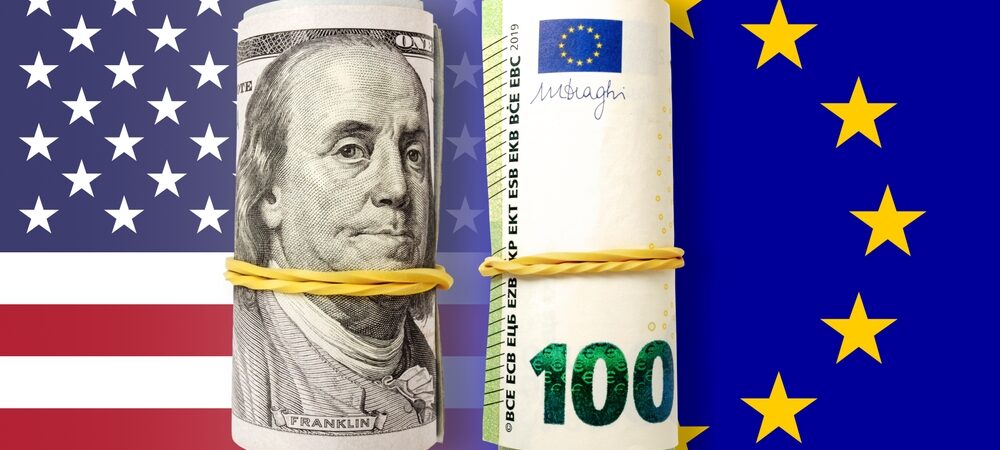
The European Parliament has approved its negotiating position on two legislative proposals that implement the tariff-related aspects of the trade agreement between the European Union and the United States. The agreement was reached in July 2025 at the Turnberry golf resort in Scotland between European Commission President Ursula von der Leyen and US President Donald Trump.
If these texts are agreed with the Council of the EU, they will eliminate most tariffs on US industrial goods imported into the EU and grant preferential market access for a wide range of US fishery and agricultural products – in line with the commitments made in summer 2025. In contrast, European products exported to the US will face a 15% tariff.
The two legislative acts were approved with the following votes:
- 417 in favor, 154 against, and 71 abstentions (for adjusting customs duties and opening tariff quotas for certain US-origin goods).
- 437 in favor, 144 against, and 60 abstentions (for non-application of customs duties on certain imports).
However, the European Parliament’s approval is not unconditional. MEPs have significantly strengthened the protective clauses compared to the European Commission’s original proposal. The goal is to prevent the EU from granting tariff concessions without full reciprocity from the U.S. side.
Rapporteur Bernd Lange (President of the International Trade Committee and parliamentary negotiator) summarized the position: the Parliament will accept the commercial terms of the agreement “only if the regulation contains very solid and clear guarantees” and “only after the United States has fully respected the terms of the agreement.”
Key safeguards introduced by the Parliament
- Strengthened suspension clause: The Commission could propose the total or partial suspension of tariff preferences if the U.S. imposes additional tariffs above the agreed 15% limit, introduces new tariffs on EU products, undermines the agreement’s objectives, discriminates against EU operators, threatens the territorial integrity, foreign policy, or defence of EU member states, or engages in economic coercion.
- Sunrise (entry-into-force) clause: The tariff benefits granted by the EU will only take effect once the US actually fulfills its commitments — particularly by lowering tariffs on European products (especially those with steel and aluminium content) to a maximum of 15%.
- Sunset clause: The main regulation will expire on 31 March 2028, and can only be extended through a new legislative proposal following a comprehensive impact assessment. This gives the Parliament ongoing political control and prevents the concessions from becoming permanent without verifying their effects on European industry, agriculture, and consumers.
- Safeguard mechanism: The Commission must monitor the impact of the new trade regime and can temporarily suspend preferences if surging US imports cause serious damage to European industry.
In short, tariff liberalization is possible – but only within a strictly conditioned and reversible framework.
Background on the Turnberry agreement
The Turnberry agreement, reached in July 2025 and formalized in a joint declaration the following August, was intended to stabilize transatlantic trade relations after years of tensions over industrial tariffs, metals, and market access.
The process faced delays due to legal and political uncertainties in the U.S. In February 2026, the European Parliament temporarily froze the legislative work pending greater clarity from Washington.
Commission and Council alignment with Parliament’s position
Bernd Lange stated after the vote that the Parliament has adopted “a strong position” and intends to stick to it. The first trilogue (negotiations with the Commission and Council) is scheduled for 13 April. He emphasized that “the ball is now in the United States’ court,” with the first expected signal being the U.S. return to the 15% tariff ceiling on steel-containing products (often referred to as “derivatives”).
Lange highlighted other essential conditions, including guarantees against tariffs exceeding 15% after the current framework expires, and robust suspension clauses for any coercion against member states or threats to the Union’s territorial integrity. He expressed confidence in reaching an agreement with the Council, noting emerging convergences on safeguards and review clauses.
When asked about comments from the US ambassador suggesting the EU should approve the deal quickly without changes to avoid risks to liquefied natural gas (LNG) supplies, Lange replied that “many people in the world have different opinions,” but the EU’s task is to defend European interests. “And that is what we will do,” he added.
European Commission’s stance
Olof Gill, the European Commission’s Deputy Chief Spokesperson for Trade, welcomed the Parliament’s positive vote. He described it as an important step showing that the EU is proceeding with the implementation of its commitments under the EU-US joint declaration. The Commission now looks forward to the trilogues to discuss the amendments in detail.
At the same time, Gill stressed that Brussels expects Washington to honour its own commitments: “We look forward to the US administration doing its part of the agreement and following up on its commitments,” while continuing constructive work on other aspects of the joint declaration, particularly regarding steel, steel derivatives, and possible tariff exemptions.
The final outcome will depend on negotiations with the Council and, crucially, on the U.S. fulfilling its side of the deal.
To read the article as it was published by EUalive, please click here.